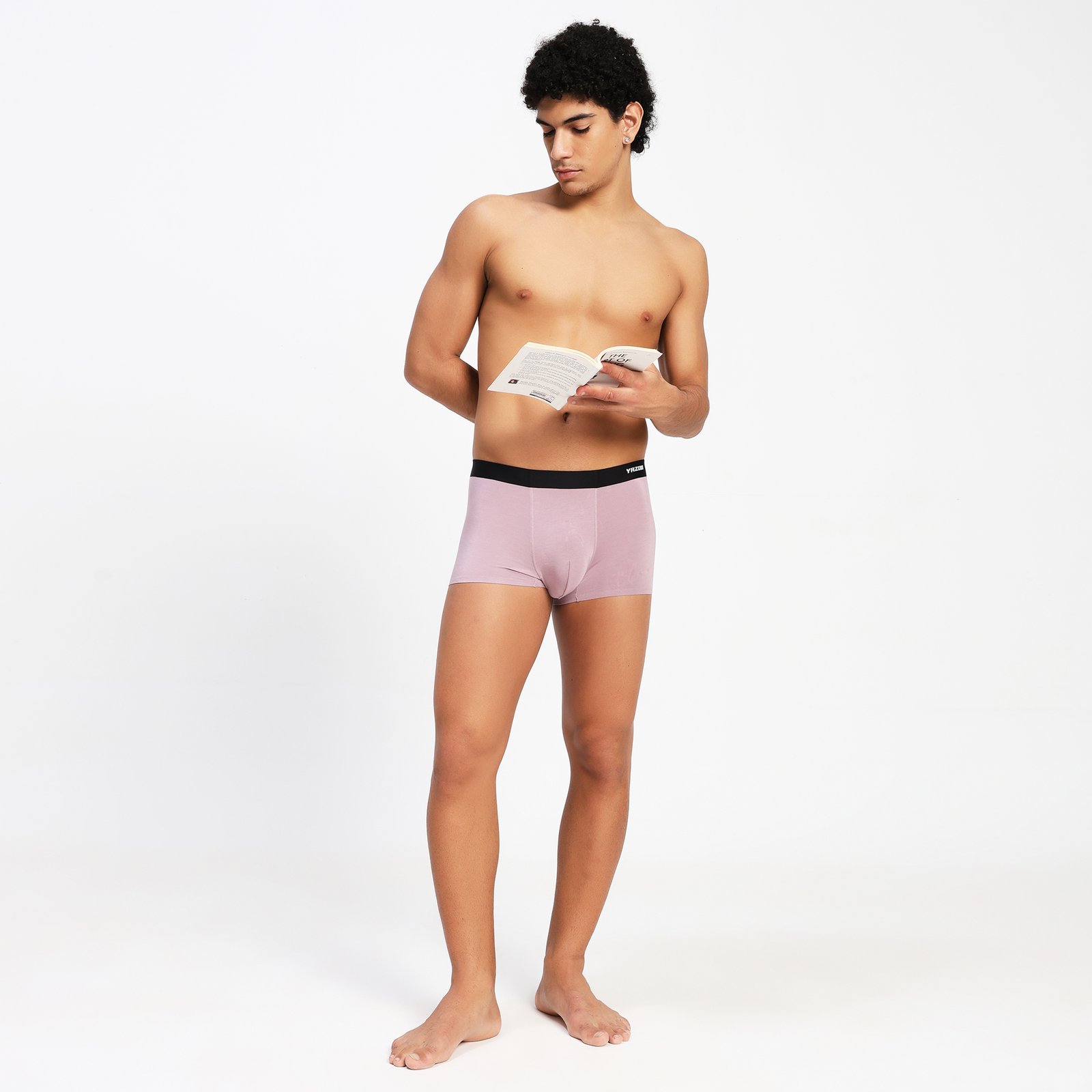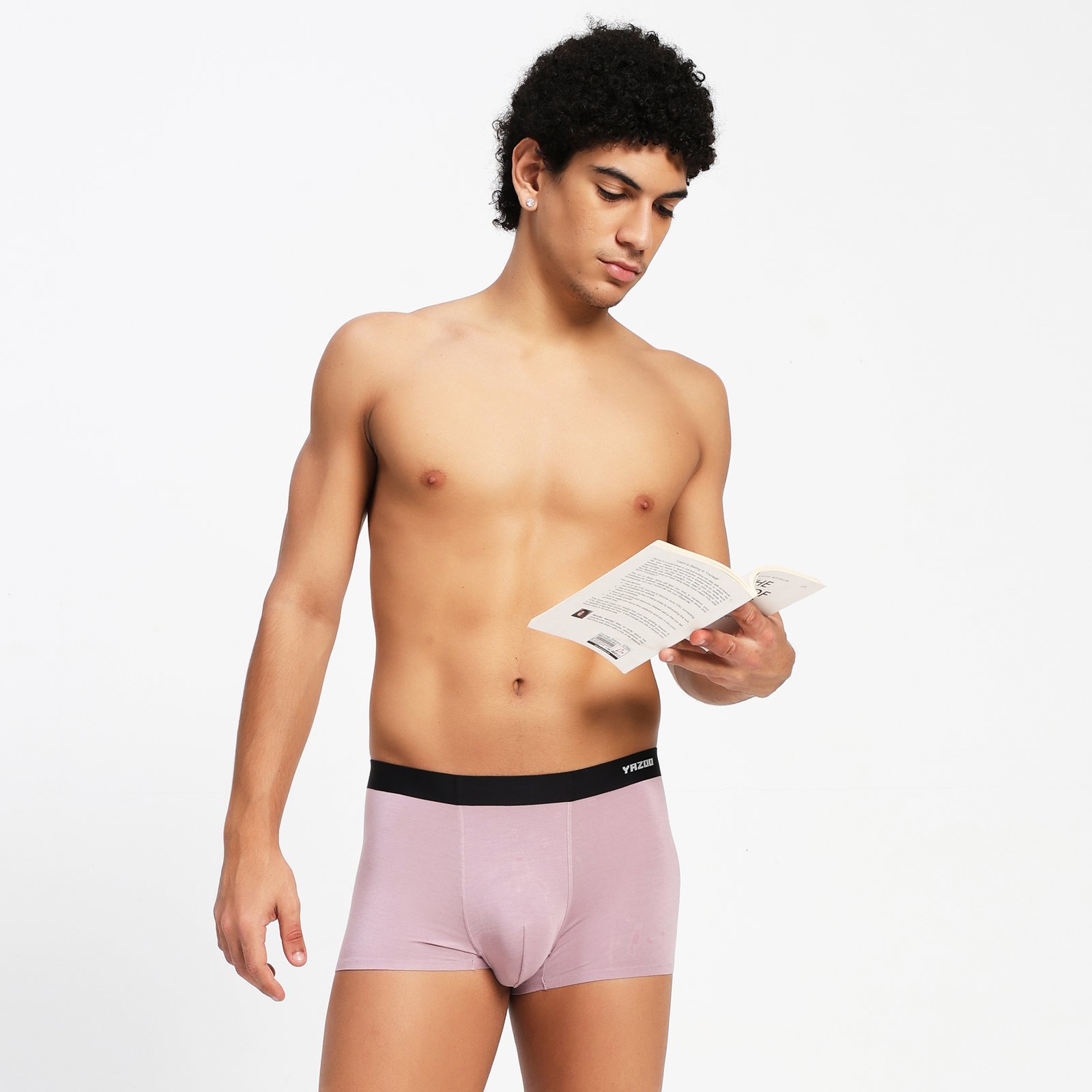
Most men don’t think about how often to replace underwear until something goes visibly wrong — a hole, a stretched-out waistband, a pair that just doesn’t feel right anymore. By then, you’ve usually been wearing it well past its useful life. Underwear wears out quietly, and the signs are easy to miss if you’re not looking for them.
Here’s the real answer, the warning signs to watch for, and how to make good underwear last longer in the first place.
In This Guide
- The General Rule
- 7 Warning Signs Your Underwear Needs Replacing
- Why This Matters More Than You’d Think
- How Fabric Quality Affects Lifespan
- How to Extend the Life of Your Underwear
- Quick Reference: Should You Replace It?
- FAQs
The General Rule: How Often to Replace Underwear
Most guidance lands in the same range: replace your everyday underwear roughly every 6 to 12 months with regular wear and washing. That’s a starting point, not a hard rule — quality, fabric, wash frequency, and how many pairs you rotate through all shift the real number. A well-made pair in a durable fabric worn in rotation with several others can last well over a year; a cheap pair worn on repeat can wear out in a few months.
The honest way to know it’s time isn’t a calendar — it’s the condition of the fabric itself.
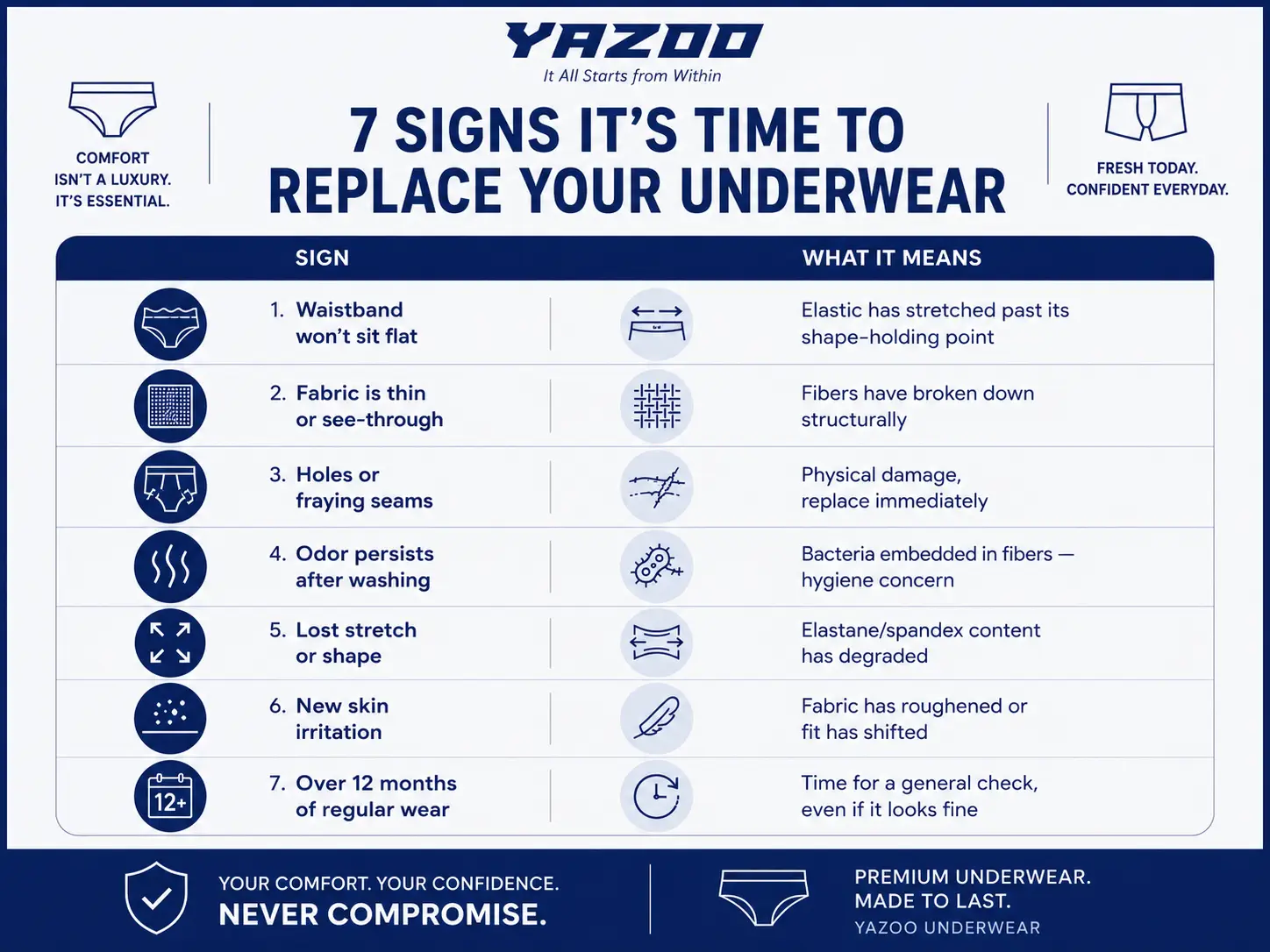
7 Warning Signs Your Underwear Needs Replacing
1. The Waistband Has Lost Its Grip
If the elastic rolls, digs in unevenly, or no longer sits flat, the waistband has stretched past the point of holding its shape. This is usually the first sign, well before the fabric itself shows wear.
2. The Fabric Has Thinned or Gone See-Through
Hold it up to the light. If you can see through areas that used to be opaque — especially at the seat — the fibers have broken down structurally, not just cosmetically.
3. There Are Holes or Fraying Seams
This one’s obvious, but it’s often ignored for “just a little longer.” Small holes get bigger fast with continued washing and wear.
4. Odor Persists Even After Washing
If a fresh-from-the-wash pair still smells, bacteria has worked into the fibers deeply enough that regular washing can’t fully remove it. That’s a hygiene issue, not just a laundry one.
5. It’s Lost Its Stretch and Shape
Fabric that used to snap back now sags or stays stretched out after wearing. Once elastane or spandex content breaks down, no amount of washing restores it.
6. You’re Noticing Skin Irritation
Increased chafing, itching, or irritation from a pair that used to feel fine is often a sign the fabric has roughened or the fit has changed as the material degraded.
7. It’s Simply Been Over a Year of Regular Wear
Even if nothing looks obviously wrong, fabric fatigues over time. If you genuinely can’t remember buying a pair, it’s worth a closer look — or just retiring it.
Why This Matters More Than You’d Think
Replacing worn-out underwear isn’t just about appearances. Underwear sits against skin for hours a day, and degraded fabric holds onto bacteria and moisture more than fresh fabric does — which is part of why hygiene guidance around undergarments generally recommends regular replacement, not just regular washing. You can read more general background on undergarments and hygiene practices on Wikipedia if you want the broader context.
Beyond hygiene, worn elastic and thinned fabric simply don’t support or fit the way they’re supposed to — which affects comfort throughout the entire day, not just how the underwear looks.
How Fabric Quality Affects Lifespan
Not all underwear wears out at the same rate. A few factors that make the biggest difference:
- Fabric blend. A quality modal fabric with proper elastane content tends to hold its shape and stretch far longer than plain, low-grade cotton.
- Construction. Bonded, seamless waistbands generally outlast stitched ones, which can fray at the seam over repeated washing.
- Wash care. Harsh detergents, high heat, and tumble drying all accelerate fiber breakdown, regardless of how good the fabric started out.
Investing in better-made pairs upfront often means replacing underwear less often overall — the cost evens out over time, and you’re not dealing with worn-out elastic every few months.
How to Extend the Life of Your Underwear
A few habits that noticeably slow down wear:
- Wash in cold or lukewarm water rather than hot, which breaks down elastane faster.
- Air dry when possible — tumble drying on high heat is one of the fastest ways to wear out elastic.
- Rotate through enough pairs so no single pair is worn and washed too frequently relative to the rest.
- Avoid fabric softener on stretch fabrics, as it can coat and weaken elastic fibers over time.
Quick Reference: Should You Replace It?
FAQs
How often should you replace underwear on average?
Most guidance suggests every 6 to 12 months with regular wear, though quality fabric and proper care can extend that noticeably.
What’s the clearest sign it’s time to replace a pair?
A waistband that no longer holds its shape or fabric that’s visibly thinned are usually the earliest and most reliable signs, ahead of holes or odor.
Does better fabric really make underwear last longer?
Yes. A well-constructed pair in a durable stretch fabric like modal typically holds its shape and elasticity considerably longer than low-grade cotton, especially with proper washing care.
Final Word
Knowing how often to replace underwear comes down to reading the fabric, not the calendar — a stretched waistband or thinning fabric is your cue, whether that’s at six months or eighteen. When it’s time to refresh your rotation, check out Yazoo’s new arrivals or browse the full shop. And if you’re restocking anyway, it’s worth revisiting your size and deciding between briefs and trunks while you’re at it.