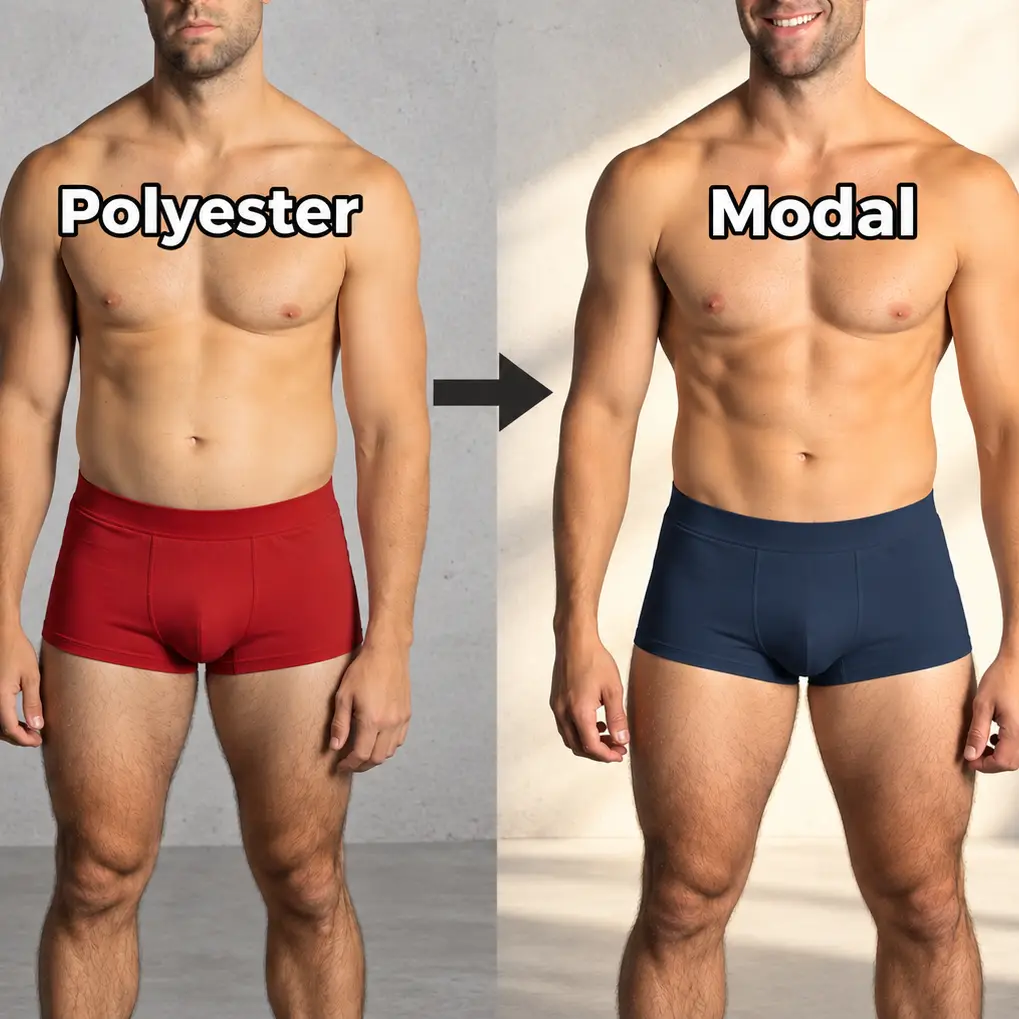
Polyester vs Modal Underwear: What the Fabric Label Actually Means
Flip over the tag on a pair of underwear and you’ll often find a list that reads like a chemistry exam: polyamide, elastane, Tactel, viscose, modal. Most people skim past it, but that label tells you more about how a pair will feel, breathe, and last than any marketing line on the packaging. This guide to polyester vs modal underwear (and nylon, which shows up under several names) explains what each fiber is, how they differ, and what to look for.
In This Guide
- Decoding the Label: Same Fiber, Different Names
- What Each Fiber Actually Is
- Polyester vs Modal Underwear: Key Differences
- Heat, Fit, and What the Research Actually Says
- Why Modal Underwear Still Contains Elastane
- How to Read an Underwear Fabric Label
- FAQs
Decoding the Label: Same Fiber, Different Names
Textile labels use a mix of generic names and brand names, which makes the same material look like several different ones. None of this is trickery; it’s standard industry naming:
- Nylon and polyamide are the same family of fiber. “Polyamide” is the generic chemical name; “nylon” is the common name.
- Tactel is a brand name for a type of nylon (polyamide) yarn, much like Lycra is a brand name for elastane (spandex).
- Elastane and spandex are the same thing, with the name varying by region.
- Viscose, rayon, and modal are all regenerated cellulose fibers, made from plant pulp that’s chemically processed into fiber. Modal is a refined version of this.
So if a label says “polyamide” and the packaging says “Tactel”, that’s one fiber described two ways, not two different materials. What matters is knowing what that fiber does against your skin.
What Each Fiber Actually Is
- Polyester: a fully synthetic, petroleum-derived fiber. Durable, wrinkle-resistant, quick to dry, but it absorbs very little moisture and tends to feel less breathable against skin.
- Nylon / polyamide / Tactel: also fully synthetic. Strong, smooth, and stretchy, widely used in sportswear and seamless knits. Breathability depends heavily on how the fabric is knit.
- Cotton: a natural fiber. Breathable and familiar, but it absorbs moisture and can stay damp for a while.
- Modal: a semi-synthetic fiber made from beech tree pulp. Soft, breathable, and good at moving moisture away from skin. Our cotton vs modal explainer goes deeper on how it compares.
- Elastane (spandex): a synthetic stretch fiber blended in small amounts to give underwear its stretch and recovery.
Polyester vs Modal Underwear: Key Differences
| Factor | Polyester | Nylon / Polyamide | Cotton | Modal |
|---|---|---|---|---|
| Origin | Synthetic | Synthetic | Natural | Semi-synthetic (plant pulp) |
| Breathability | Lower | Varies with knit | Good | Very good |
| Moisture handling | Absorbs little, can feel clammy | Absorbs little | Absorbs, dries slowly | Absorbs and releases quickly |
| Softness | Can feel slick or rough | Smooth | Soft, can roughen | Very soft |
| Drying time | Fast | Fast | Slow | Fast |
| Best for | Durability, sportswear | Stretch, seamless knits | Basic everyday wear | Everyday comfort in heat and humidity |
Neither synthetic is “bad” in every use. Polyester and nylon are excellent for gym wear where durability and quick drying matter. The trade-off for everyday underwear, especially in India’s heat and humidity, is breathability and how the fabric feels over a long day. Our guide to staying comfortable in humid weather covers why that matters.
Heat, Fit, and What the Research Actually Says
You’ll sometimes see claims online that synthetic underwear damages sexual health or fertility. Here is what’s reasonable to say, and what isn’t:
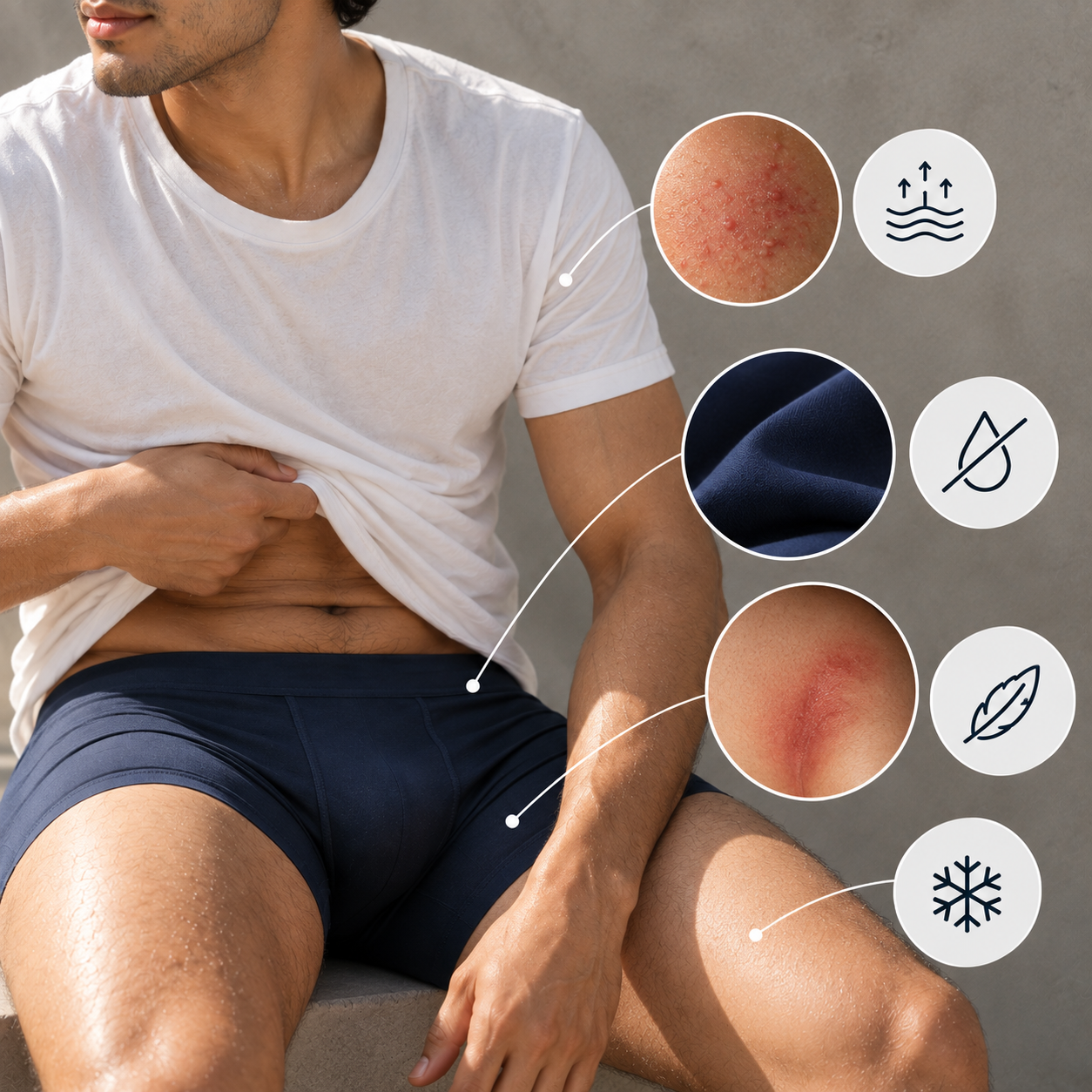
- What’s plausible: The testicles function best slightly below core body temperature. Fabric that traps heat and moisture, especially when paired with a very tight fit, can raise local temperature. Some studies have looked at underwear style and sperm parameters, and a few small or older studies have looked at synthetic fabrics specifically.
- What’s not established: There is no strong evidence that wearing polyester or nylon underwear causes infertility or sexual dysfunction. Much of the research is small, observational, or focused on fit (tight vs loose) rather than fiber type, and results don’t prove cause and effect.
- The practical takeaway: If you’d like to minimize heat and moisture, breathable fabrics and a comfortable, non-restrictive fit are a sensible choice. That’s a comfort and common-sense reason, not a medical warning.
If you’re trying to conceive or have concerns about fertility or sexual health, a doctor can give you advice based on your situation. Underwear fabric is rarely the main factor.
Why Modal Underwear Still Contains Elastane
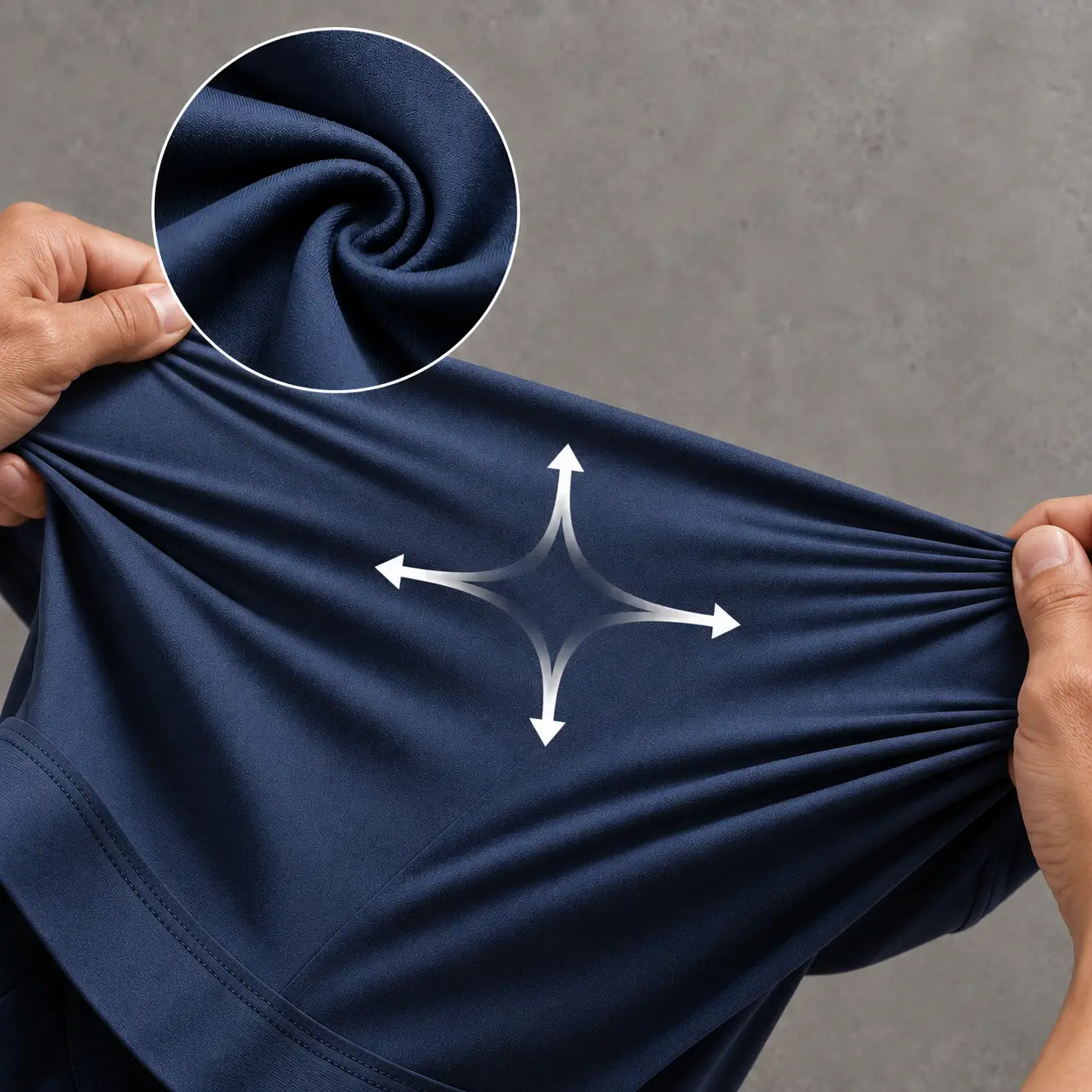
It’s worth being upfront: most modal underwear isn’t 100% modal. A small percentage of elastane is blended in so the fabric can stretch and bounce back, which is what gives you good 4-way stretch and a close fit. That’s normal and not a red flag. What matters is the balance: a fabric that’s mostly modal with a modest amount of elastane behaves very differently from one that’s mostly polyester or nylon.
How to Read an Underwear Fabric Label
A few quick checks next time you’re shopping:
- Look at the first fiber listed. Labels list fibers by percentage, so the largest share comes first and tells you what the fabric mostly is.
- Check the elastane percentage. A small share (often single digits to low teens) is typical for stretch and recovery.
- Treat brand names as clues, not mysteries. If you see Tactel, think nylon; if you see Lycra, think elastane.
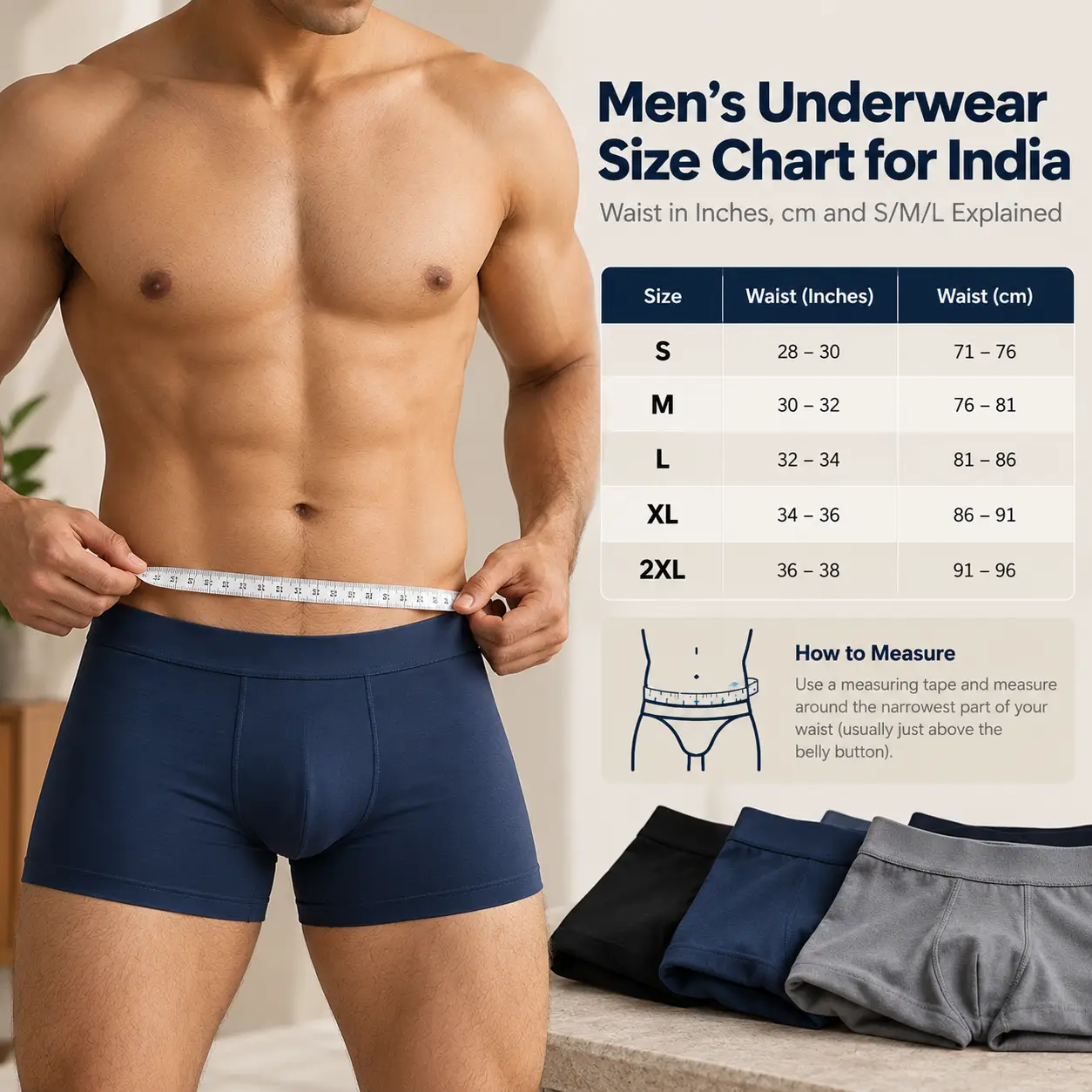
- Match fabric to use. Gym and sport: synthetics are fine. Everyday wear in heat: prioritize breathability. Not sure about fit? Start with our sizing guide.
- Care for it properly. Blends with elastane last longer with gentler washing, covered in our modal care guide.
FAQs
Is polyester underwear bad for you?
Not inherently. Polyester is durable and dries fast, but it’s less breathable than fabrics like modal or cotton, so it can feel clammy in heat. There’s no strong evidence it causes serious health problems; comfort and moisture are the main practical concerns.
Are nylon, polyamide, and Tactel different materials?
No. Polyamide is the generic name for nylon, and Tactel is a brand name for a type of nylon yarn. They’re the same fiber family described in different ways.
Does synthetic underwear affect fertility?
Research is limited and mostly looks at fit and heat rather than fiber type. It hasn’t established that polyester or nylon underwear causes fertility problems. If you have concerns, speak with a doctor.
Is modal fabric natural?
Modal is semi-synthetic: it comes from beech tree pulp but is chemically processed into fiber, so it isn’t a purely natural fiber like cotton.
Why does modal underwear have elastane in it?
A small amount of elastane gives the fabric stretch and recovery so the underwear keeps its shape and fits closely.
Is polyester or modal better for everyday wear in India?
For everyday wear in heat and humidity, most people find modal more comfortable because it breathes better and manages moisture more effectively than polyester.
Final Word
Once you know that Tactel is nylon and polyamide is nylon, the label stops being intimidating. For everyday comfort, especially in India’s climate, breathability and fit matter most, and that’s where modal tends to do well. Browse Yazoo’s shop to feel the difference, and check each product page for the exact fabric composition.
This article is for general information and isn’t medical advice. If you have concerns about fertility or sexual health, please consult a doctor.