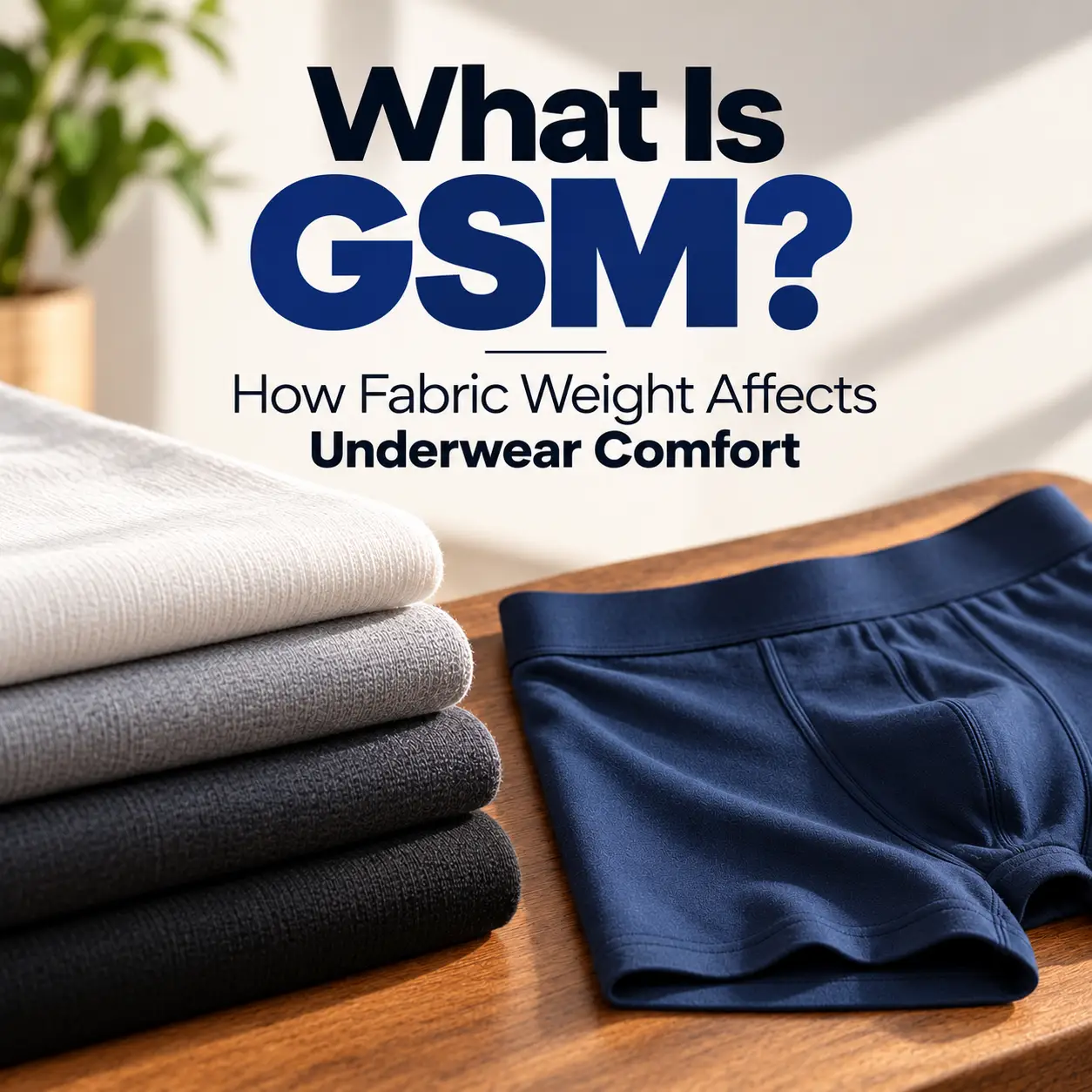
What Is GSM? How Fabric Weight Affects Underwear Comfort
You may have seen “GSM” in a fabric description or a product listing without knowing what it means. It’s a simple number, but it explains a lot about how a piece of fabric feels, how warm it is, and how long it lasts. If you’ve ever wondered what is GSM in fabric, this guide explains it in plain terms and shows how it affects underwear in particular.
In This Guide
- What Does GSM Mean?
- GSM Ranges and What They Feel Like
- How GSM Affects Underwear Comfort
- Does a Higher GSM Mean Better Quality?
- Choosing the Right GSM for India’s Climate
- How to Check or Estimate GSM
- FAQs
What Does GSM Mean?
GSM stands for grams per square metre. It measures how heavy a fabric is by weighing one square metre of it. A fabric rated at 150 GSM weighs 150 grams per square metre, while a 200 GSM fabric weighs more and is typically thicker or denser.
In short, GSM is a measure of fabric weight and density. It doesn’t tell you the material (cotton, modal, polyester) or how good the fabric is. It tells you how much fabric is packed into a given area.
GSM Ranges and What They Feel Like
Exact ranges vary by fabric type and knit, but here is a rough guide for knit fabrics like those used in underwear and t-shirts:
| Weight | Approximate GSM | Typical feel | Suits |
|---|---|---|---|
| Lightweight | Under about 150 | Thin, airy, drapes close to the body | Hot and humid weather, summer |
| Midweight | About 150 to 200 | Balanced, smooth, a little more body | Year-round everyday wear |
| Heavyweight | Above about 200 | Thick, warm, more structured | Cooler weather, durability |
Treat these as approximate. Different fibers feel different at the same GSM, and a knit’s structure also changes how heavy it feels.
How GSM Affects Underwear Comfort
Because underwear sits against your skin all day, fabric weight shows up in several ways:
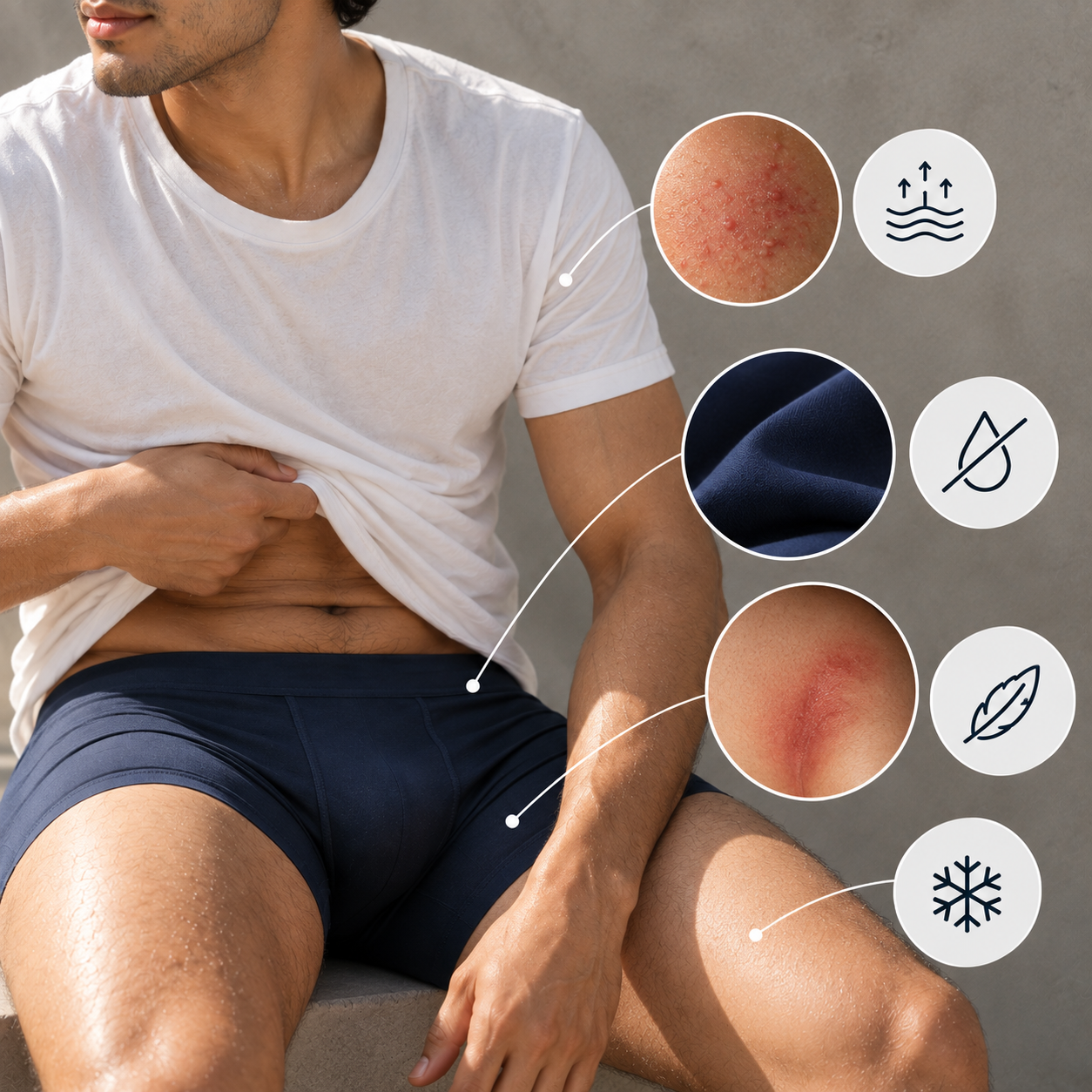
- Warmth and breathability: lighter fabrics let heat and moisture escape more easily, while heavier fabrics hold more warmth.
- Feel on skin: lightweight fabrics often feel softer and closer to a “second skin”, while heavier ones feel more substantial.
- Visibility: very light fabrics can be more see-through in pale colours, while heavier fabrics give more opacity.
- Support and shape: a bit more weight and density can help a fabric hold its shape, though stretch and construction matter too.
- Drying time: lighter fabrics generally dry faster after washing, which matters during humid weather.
Does a Higher GSM Mean Better Quality?
Not necessarily. This is one of the most common misunderstandings about GSM:
- Higher GSM isn’t automatically better. A heavier fabric is warmer and thicker, which can be a downside in India’s heat.
- Lower GSM isn’t automatically cheaper or weaker. A lightweight fabric made from good fibers and well finished can feel better and last well when cared for properly.
- Other factors matter just as much. Fiber type, knit quality, elastane content, finishing, and construction all affect comfort and durability.
GSM is best used as one clue about how a fabric will feel and perform, not as a quality score on its own. For more on fibers, see our guide to polyester vs nylon vs modal underwear.
Choosing the Right GSM for India’s Climate
India’s climate pushes most everyday innerwear toward the lighter end:
- Summer and monsoon: lighter fabrics breathe better and dry faster, which helps with moisture and chafing. Our guides to innerwear for monsoon and preventing chafing and heat rash cover this in more detail.
- Winter and cooler regions: a slightly heavier fabric can feel more comfortable and warmer.
- All-day indoor wear with AC: midweight fabrics often strike a good balance across temperature swings.
Whatever the weight, breathability depends on the fibre and knit as well as the GSM, so a light modal fabric will usually feel cooler than a light fabric made of a non-breathable synthetic.
How to Check or Estimate GSM
Most underwear listings don’t state GSM, but you can still learn about the fabric:
- Check the product description or ask the seller. Some brands share fabric weight on request.
- Compare by feel. Lightweight fabric feels thin and drapes easily, while heavier fabric feels thicker and more substantial.
- Estimate it yourself if you have a spare piece of fabric. Cut a 10 cm by 10 cm square, weigh it in grams, and multiply by 100 to get GSM. This works because 10 cm by 10 cm is one hundredth of a square metre.
Keep in mind that stretch fabric with elastane is measured with the elastane included, so a swatch weighed relaxed will give the most consistent result.
FAQs
What does GSM stand for in fabric?
It stands for grams per square metre, a measure of how much one square metre of the fabric weighs.
Is a higher GSM better for underwear?
Not necessarily. Higher GSM means a heavier, warmer fabric, which can be less comfortable in hot weather. The best choice depends on climate and preference.
What GSM is good for hot and humid weather?
Lighter fabrics, generally under about 150 GSM, tend to feel cooler and dry faster, though fibre and knit also matter.
Does GSM tell me how durable underwear is?
Only partly. Fibre type, knit quality, elastane content, and construction affect durability too, so GSM alone isn’t a reliable quality measure.
How do I calculate GSM at home?
Cut a 10 cm by 10 cm square of fabric, weigh it in grams, and multiply the result by 100.
Why don’t most underwear brands list GSM?
Many focus on fibre, fit, and features instead, but you can often ask the seller for fabric weight if it matters to you.
Final Word
Once you know what GSM is in fabric, you can read a fabric description with more confidence: lighter for heat and humidity, heavier for cooler weather, and always balanced against fibre, knit and fit. For more on how construction shapes comfort, read our guides to seamless underwear and 4-way stretch fabric, then browse Yazoo’s shop to see how a lightweight modal fabric feels.