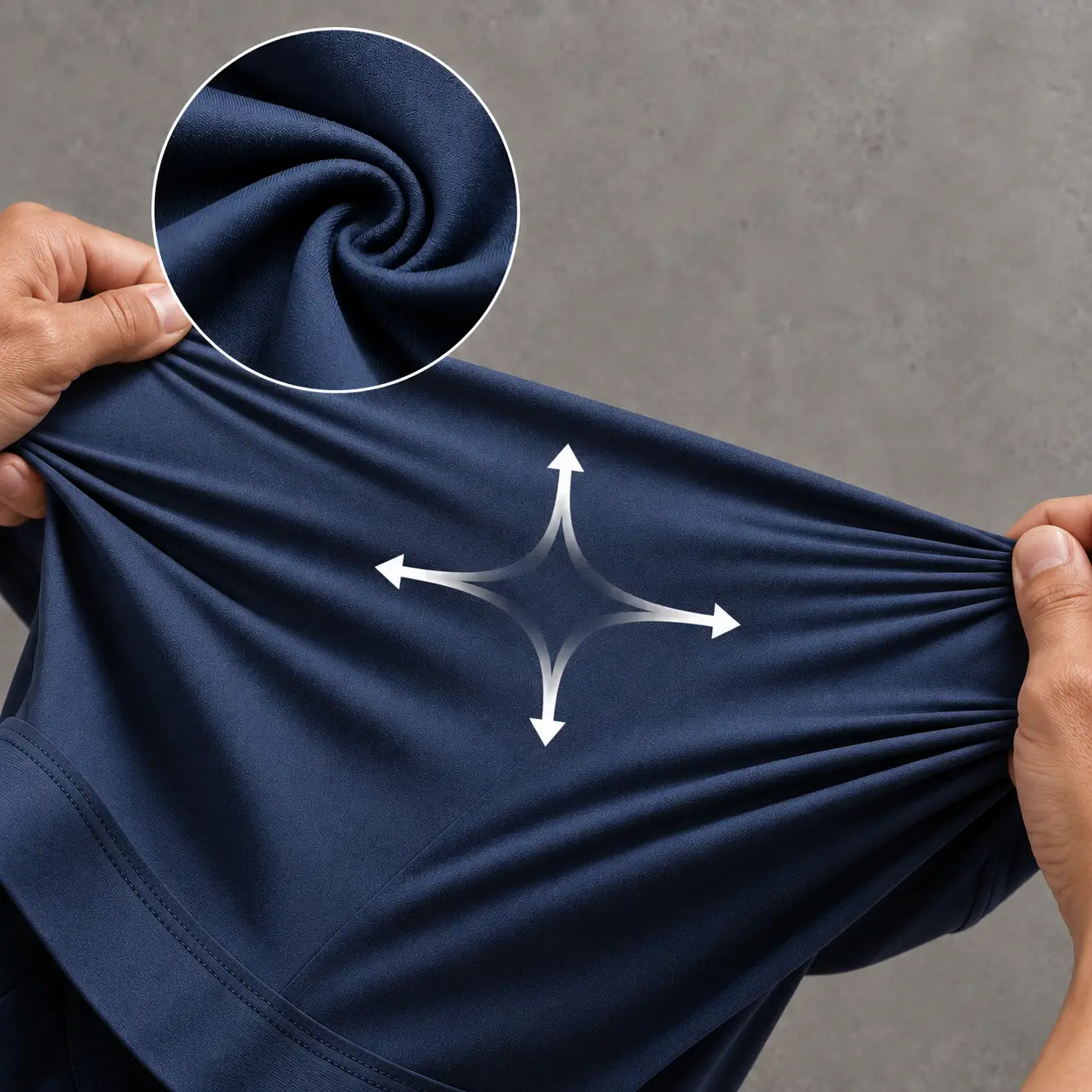
“4-way stretch” shows up on nearly every modern underwear listing, right alongside “seamless” and “modal” — but most first-time buyers couldn’t explain what actually separates it from regular stretch fabric. Understanding 4-way stretch fabric makes it much easier to tell a genuine quality claim from a label that doesn’t mean much in practice.
Here’s what the term actually means, and why it matters more than it might seem.
In This Guide
- What Does “4-Way Stretch” Actually Mean?
- 2-Way vs 4-Way Stretch
- Why 4-Way Stretch Matters for Underwear
- How It Affects Fit and Sizing
- Common Myths About Stretch Fabric
- How to Identify Quality 4-Way Stretch Fabric
- FAQs
What Does “4-Way Stretch” Actually Mean?
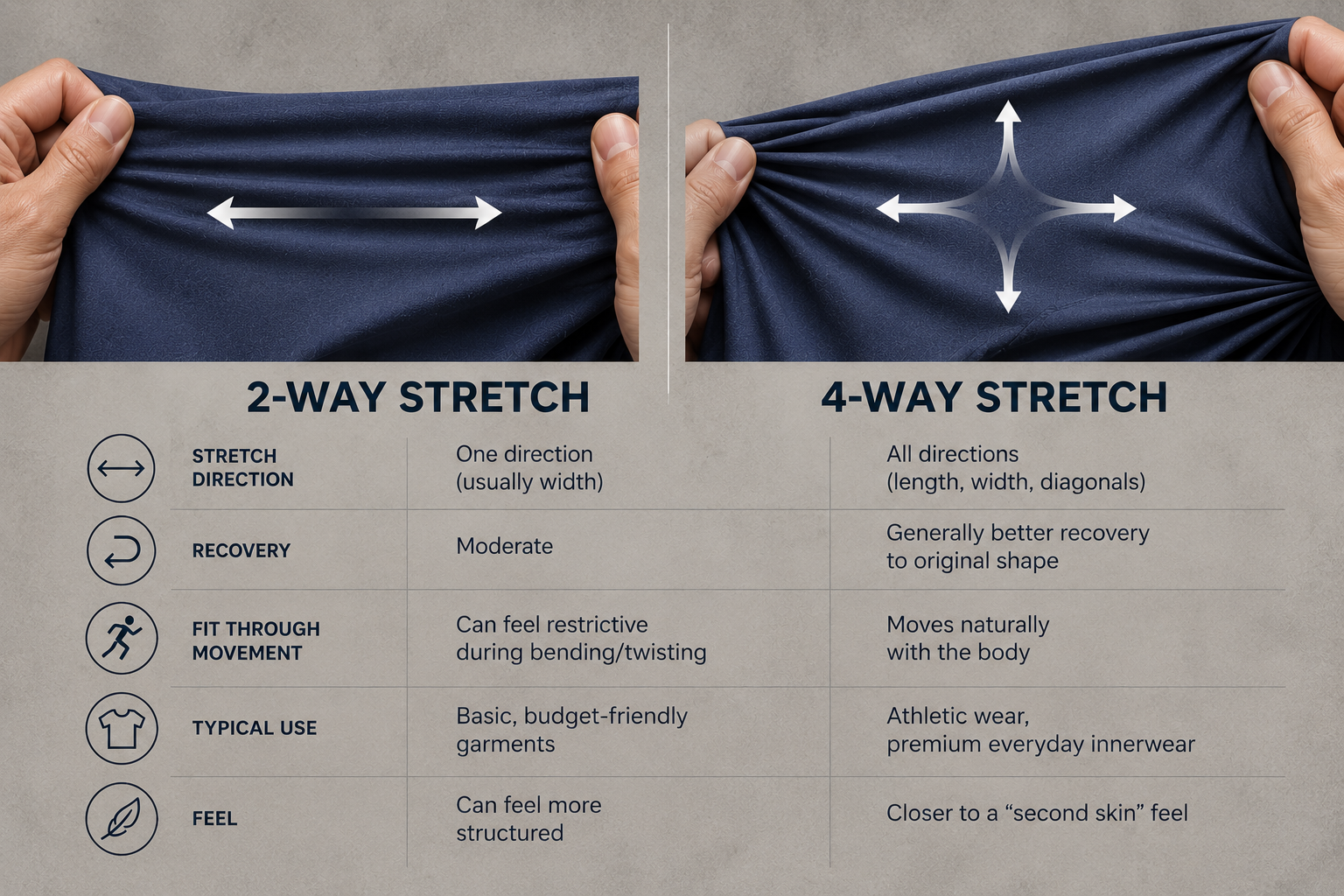
4-way stretch fabric stretches in four directions — lengthwise, widthwise, and both diagonals — rather than just one or two. This comes from blending a base fiber (like modal or cotton) with an elastic fiber such as elastane or spandex, woven or knit in a way that allows movement in every direction rather than a single line of give.
In practical terms, this means the fabric moves with your body during any kind of motion — sitting, bending, walking, exercising — rather than only stretching if you pull it one specific way.
2-Way vs 4-Way Stretch
Why 4-Way Stretch Matters for Underwear
Underwear undergoes constant, varied movement throughout the day — sitting, standing, walking, bending — unlike a garment that mostly experiences one type of motion. 4-way stretch fabric matters here for a few concrete reasons:
- It moves with the body instead of restricting certain movements, since stretch isn’t limited to one direction.
- It reduces the feeling of restriction during activities like exercise, prolonged sitting, or bending.
- It helps maintain fit — a fabric that only stretches one way can feel loose in one direction and tight in another as you move; 4-way stretch adjusts more evenly.
- It supports a snugger, more consistent fit without needing excess fabric to accommodate movement.
How It Affects Fit and Sizing
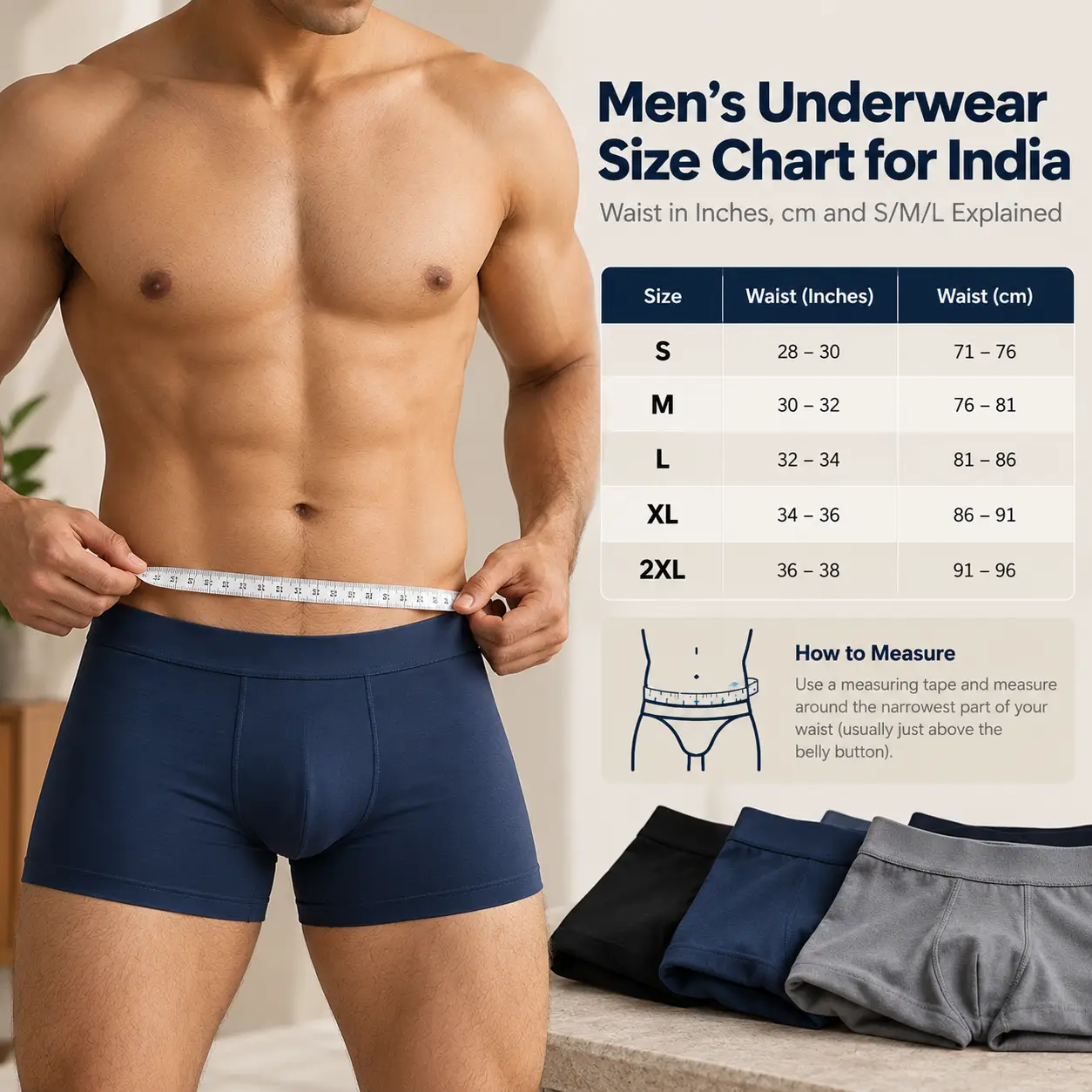
Fabric with genuine 4-way stretch tends to be more forgiving at size borderlines than fabric with limited or no stretch. If you’re between two sizes, a well-made 4-way stretch blend often accommodates that gap more comfortably than a rigid or minimally stretchy fabric would. That said, stretch is a helpful buffer, not a substitute for proper sizing — check our sizing guide to get your actual measurement right regardless of how stretchy the fabric is.
Common Myths About Stretch Fabric
- “Any stretchy fabric is 4-way stretch.” Not necessarily — plenty of fabric stretches in one direction only (2-way) and is marketed loosely as “stretchy” without the specific 4-way construction.
- “More stretch always means better quality.” Stretch quality depends on the elastane content and construction, not just how much a fabric visibly stretches when pulled — cheap fabric can stretch a lot and still recover poorly.
- “4-way stretch means one size fits most.” Stretch adds tolerance at the margins, but proper sizing still matters — it’s a comfort feature, not a sizing shortcut.
How to Identify Quality 4-Way Stretch Fabric
A few practical checks beyond the label claim itself:
- Recovery test — gently stretch a section of fabric and release it; quality fabric returns close to its original shape quickly, while lower-quality stretch fabric stays visibly loosened.
- Fabric composition — check for a blend that includes elastane or spandex alongside the base fiber (like modal), since this is what actually creates genuine multi-directional stretch.
- Feel across different pulls — try gently stretching the fabric both lengthwise and diagonally; genuine 4-way stretch should give noticeably in both directions, not just one.
FAQs
What does 4-way stretch actually mean in fabric?
It means the fabric stretches in four directions — length, width, and both diagonals — rather than in just one or two directions like basic stretch fabric.
Is 4-way stretch fabric better than regular stretch fabric?
For garments that move with the body throughout the day, like underwear, yes — it generally offers better comfort and recovery than fabric that only stretches in one direction.
Does 4-way stretch fabric mean I can size down?
No — it adds comfort and tolerance at size borderlines, but proper sizing based on measurement still matters more than relying on stretch to compensate.
How can I tell if fabric genuinely has 4-way stretch?
Check the fabric composition for elastane or spandex content, and try gently stretching it in different directions — genuine 4-way stretch gives noticeably both lengthwise and diagonally.
Does 4-way stretch fabric wear out faster than regular fabric?
Not inherently — quality matters more than the stretch type itself. Well-made 4-way stretch fabric with proper elastane content and good care can last as long as any quality fabric blend.
Is 4-way stretch only useful for athletic wear?
No — while it’s common in athletic wear, it’s equally valuable in everyday innerwear, since normal daily movement (sitting, bending, walking) benefits from the same multi-directional flexibility.
Final Word
Understanding what 4-way stretch fabric actually means makes it easier to recognize genuine quality rather than just a label. Combined with seamless construction and proper sizing, it’s one of the core things that separates innerwear that moves with you from innerwear you have to fight with. Browse Yazoo’s shop to feel the difference in soft, 4-way stretch modal fabric.